Wai Ke 外科: External Medicine in Chinese Medicine
A Clinical Course on the Oldest and Most Practical Branch of Chinese Medicine
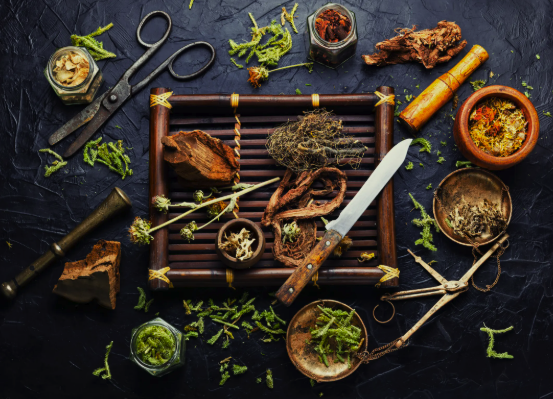
For as long as humans have been using herbs for healing, they have not only been ingested but applied directly to the surfaces of the body. They have been ground, warmed, and laid against the skin. They have been used to cover a wound, to soak an injured limb, to draw a pathogen out through the pores. Topical application of herbs belongs to the oldest layer of the tradition, reaching back to its shamanic origins. It is also the most intuitive and natural of methods, and among the most immediately useful.
Wai Ke 外科, the specialty of external medicine, offers the practitioner practical methods that can immediately be brought directly into clinical practice. External applications are remarkably safe. Side effects are rare, and resolve quickly when treatment is stopped. They reach patients who cannot or will not take herbs internally: the very young, those in acute nausea, those who simply cannot tolerate the taste.
For acupuncturists who have never prescribed herbs, External Medicine is the most natural way in. It asks far less specialized herbal knowledge than internal prescribing, it is forgiving, and its results are often immediate and dramatic.
Many acupuncturists never take that step, deterred by the depth of study internal herbal medicine seems to demand. External Medicine lowers that barrier. A practitioner can begin with a single liniment or compress, see it work, and build outward from there, widening what they are able to treat. For every acupuncturist, a small set of well-chosen topical applications can markedly improve results with many of the conditions seen every day in practice.
Most practitioners work with only a fraction of what Chinese medicine makes possible. This three-day intensive opens the specialty of External Medicine on a simple clinical fact: when acupuncture is paired with internal and external herbs, the body is treated from every direction at once, and change comes faster. You will leave with the theory, the methods, and the clinical judgment to put it to work, and you will not practice the same way afterward.
Reading the Whole Through the Surface
Wei Qi governs the surface of the body, the skin and sinews and sensory portals where our inner resources stand in direct relationship to the outside world. Chinese medicine holds an intricate understanding of this boundary, of the layers that form it and the constant exchange between inside and outside. Much of classical medicine took shape with that relationship as its central concern. Wai Ke is the specialty that takes it as a lens, and reads the whole body through it.
Key Areas of Study
Wei Qi 衛氣
The nature, formation, and function of Defensive Qi, and the surface terrain where external medicine does its work.
Bi Zheng 痹證
Wind-Damp-Cold obstruction and the treatment of chronic pain, differentiating the nature of the pathogen and its zone of residence.
External Applications
Liniments, plasters, soak-compresses, pastes, powders, inhalations, oral washes, and navel plasters, and how each is made and when each is used.
EENT Conditions
Sinus blockage and disorders of the eyes, ears, mouth, and throat, including the role of chronic sinus obstruction in unresolved pain.
Sores & Ulcers
Furuncles, boils, carbuncles, and herpetic conditions, with the stages of formation and healing and the external strategy for each.
Goiters & Breast Conditions
Nodules, lumps, and glandular accumulations, read through digestive, endocrine, and channel-based models.
Anorectal Conditions
Hemorrhoids and related disorders, treated with fumigation, sitz baths, suppositories, plasters, and ointments.
Pulse & Tongue Diagnosis
Diagnostic method oriented to External Medicine, assessing the status of Yang Qi, depth, and chronicity.
Needle Technique
Needling methods for the external terrain, and the effective combination of acupuncture with internal and external herbs.
Learning the Methods Directly
External Medicine is a craft as much as a theory, and the course treats it that way. Participants will learn how the principal external preparations are constructed, what each is for, and how to bring them into clinical use immediately.
Coating & Painting Pastes
Disperse cold, clear heat, and relieve pain.
Liniments
Spirit-soaked, for traumatic injury and sinew damage.
Ointments
For sores, ulcers, and conditions of the skin.
Plasters
Medicated adhesive plasters worn over channels and joints for Bi pain.
Soak-Compresses
For upper- and lower-body obstruction.
Medicated Powders & Inhalations
For the sinuses and the portals of the head.
Oral Washes & Gargles
For conditions of the mouth and throat.
Navel Plasters & Foot Soaks
Internal conditions treated through the surface.
Throughout, these external methods are taught alongside acupuncture and the internal use of herbs, so that the three can be combined in a single treatment. It is this pairing of needle, ingested herb, and external application that so often produces quick and substantial change.
Who This Course Is For
This seminar is designed for licensed acupuncturists, herbalists, and East Asian Medicine practitioners at any level of experience. It is especially well suited to acupuncturists who wish to broaden their clinical range without taking on the full demands of internal herbal prescribing. External Medicine asks less specialized herbal knowledge while opening a wide field of treatable conditions. Newer practitioners and advanced students with a foundational background in Chinese medicine theory are equally welcome.
Participants will leave with a working body of external methods ready for the clinic, a clear theoretical framework for understanding pain and external conditions, and the diagnostic tools to assess and track them.
From Practitioners Who Have Studied with Evan
“Thank you Evan, I've learned more in 4 days than a 4 year degree. The course was very well structured and a great balance between theory and practice. I would definitely recommend this to anyone who wants to go to the next level in their practice. Very Grateful.”
“Evan's classes are clear and inspiring. He creates a great learning atmosphere that keeps everyone engaged and easy to understand.”
“Evans' explanation of pathophysiology through a discussion about the inter-relationship of 'nature' and 'location' is 24k gold. Brilliant and profound content, humbly delivered, with clarity. Most grateful.”
“Learning Chinese medicine with Evan has been nothing less than profound and ripe with the depth and richness inherent in both the philosophy and practice of Chinese medicine.”
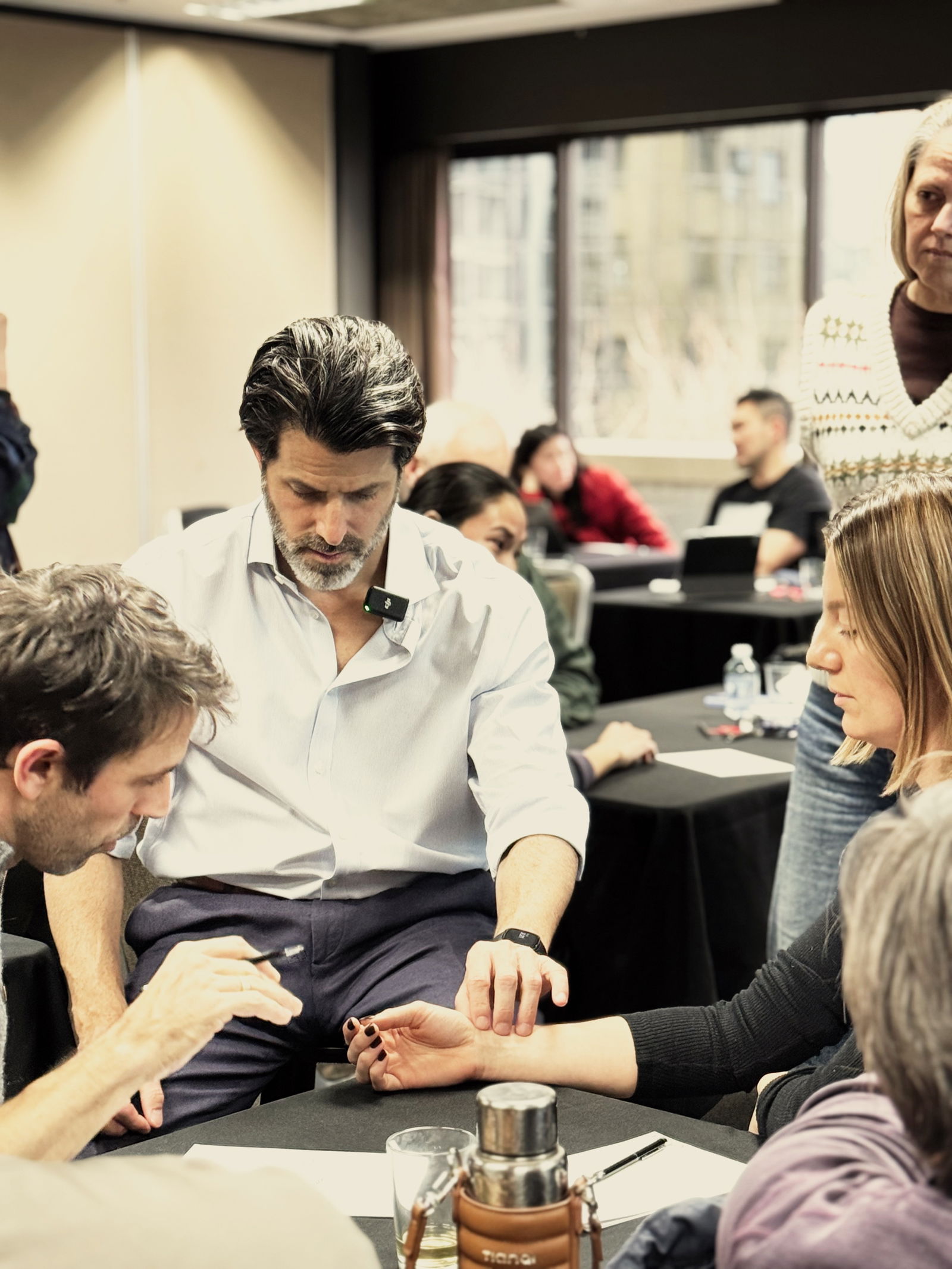
About Evan Rabinowitz, D.Ac.
Evan Rabinowitz is an acupuncturist, herbalist, educator, and founder of the Yao Shan Center for Chinese Medicine in Washington, DC, where he has maintained a clinical practice for more than 25 years. Throughout that practice, external and topical methods have remained a steady part of his clinical work, valued for their safety, their reach, and the speed with which they bring relief.
Evan has trained intensively with Jeffrey Yuen for more than 20 years, including study in waike (外科, external medicine), bone setting, and sinew releases.
As director of Herbal Medicine for nearly a decade at Maryland University of Integrative Health, a university focused mainly on acupuncture, Evan gained expertise in training students and experienced acupuncturists in herbal medicine. His career has, in part, been devoted to building a clear, workable bridge—helping acupuncturists step more fully into herbal medicine without abandoning the clinical strengths that define their practice. Evan's courses broaden the scope of what acupuncturists can treat, making their diagnostic thinking more structured, nuanced, and deliberate.
Evan's education has been deliberately eclectic, allowing him to view clinical reality through multiple lenses. Pulse and tongue diagnosis remain central in this process. Flexibility, discernment, and clinical responsiveness define his method.
With more than two decades of teaching experience, Evan currently teaches at Georgetown University School of Medicine in Washington, DC, at Daoist Traditions College of Medical Arts in North Carolina, and privately throughout the US, Europe, and Australia. His teaching is known for a clear, structured, and deeply classical approach, with the goal of helping acupuncturists treat a wider range of conditions, sharpen their diagnostic thinking, and practice with greater confidence and clinical depth.
Join Us in Barcelona
Hotel HCC Regente
Rambla de Catalunya, 76
Eixample, 08008
Barcelona, Spain
October 16–18, 2026
In Person + Live Stream
9:00 – 17:00 daily
Limited Enrollment
Enroll in Wai Ke 外科: External Medicine
In Person + Live Stream with 2-Week Playback. Both Euro and USD payment options available.
Questions & Answers
Who is this course for?
Licensed acupuncturists, herbalists, and East Asian Medicine practitioners at any level, particularly acupuncturists looking to widen their clinical range. Students with a foundational background are welcome.
Do I need extensive herbal knowledge?
No. External Medicine asks less specialized herbal training than internal prescribing, which is part of what makes it so practical. Acupuncturists and bodyworkers with no herbal experience will benefit enormously from this course, and practitioners at all levels will be able to apply the methods.
How does the live stream work?
The full seminar is broadcast live online. Registered live stream participants receive a link to join in real time, and a 2-week recording is available afterward.
Are continuing education credits available?
Yes. The course offers 18 NCCAOM PDAs. Credits are available to both in-person and live stream participants.
Will the external preparations be demonstrated?
Yes. The construction and clinical use of liniments, plasters, soak-compresses, powders, and other external medicines are covered directly, alongside needle technique and treatment demonstration.
Will there be time for questions?
Yes. There will be opportunities for questions throughout each day.
Ready to Join Us in Barcelona?
October 16–18, 2026 · In Person + Live Stream · Limited Enrollment. Early bird pricing through August 15, 2026.
Enroll Here — Limited Spaces —